Editorial · honest product contracts
SubtitleGenerator blog
Practical caption workflows. No invented rankings, user counts or claims that a sample transcript came from a live provider.
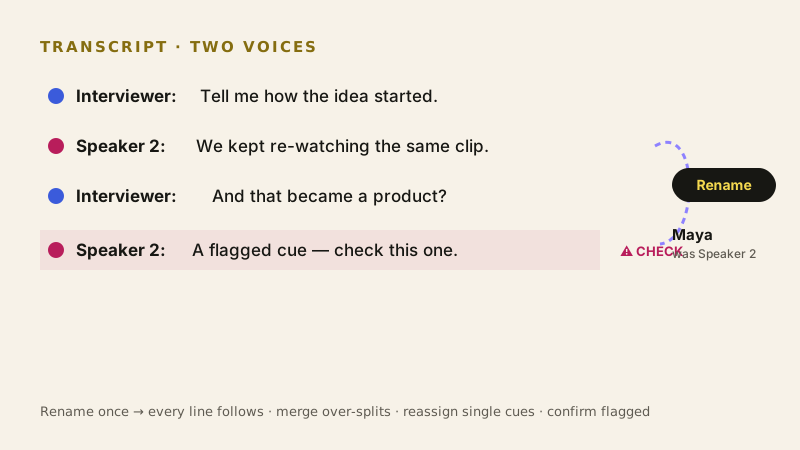
How to correct speaker labels in a transcript
Wrong speaker names in a transcript are cheap to fix — rename once, merge over-split voices, reassign single lines, and confirm flagged cues. Works on your local video, free to start.

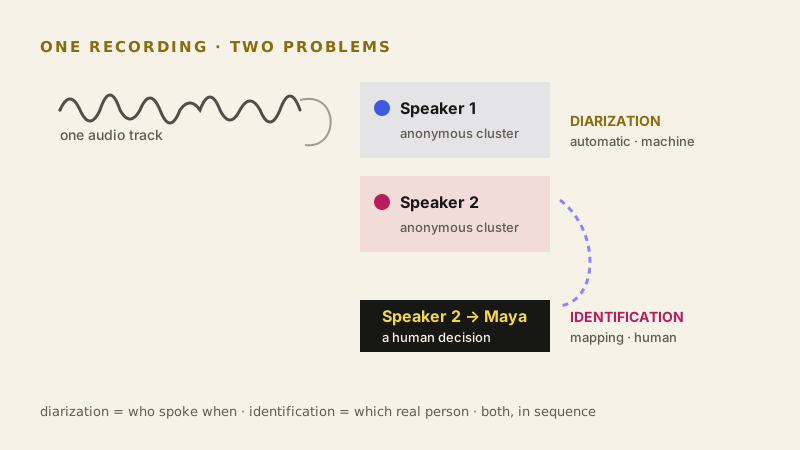
Speaker diarization vs speaker identification
Diarization splits a transcript into anonymous voices; identification maps those voices to real people. They are different problems — here is where automatic labeling ends and human work begins.
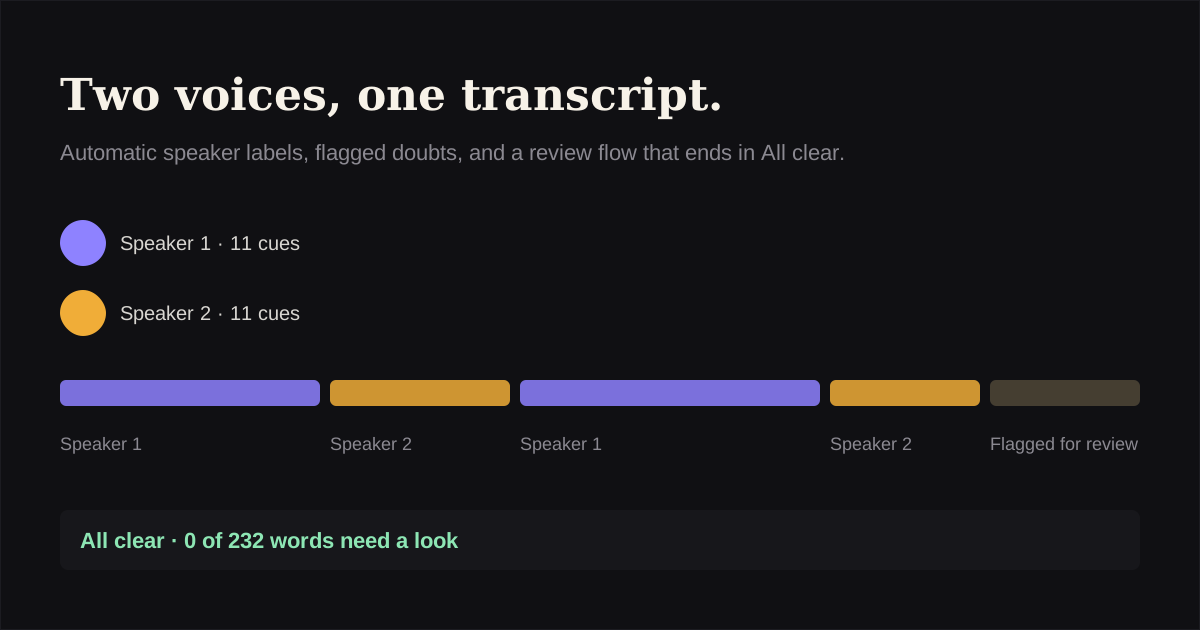
Why we built automatic speaker labels into a subtitle tool
Interviews and podcasts fail subtitles in a specific way: two voices, one transcript. Automatic speaker labels now ship in SubtitleGenerator — with the same flagged-doubts review flow as the words.
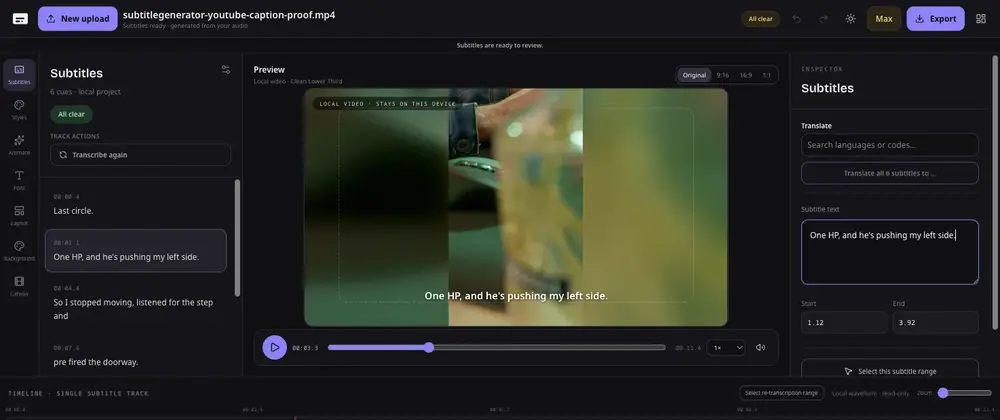
Auto Subtitles Are Drafts: Why 99% Accuracy Isn’t the Finish Line
Auto subtitles are drafts, not finished work. Learn how word confidence and a bounded review queue make subtitle errors easier to find.
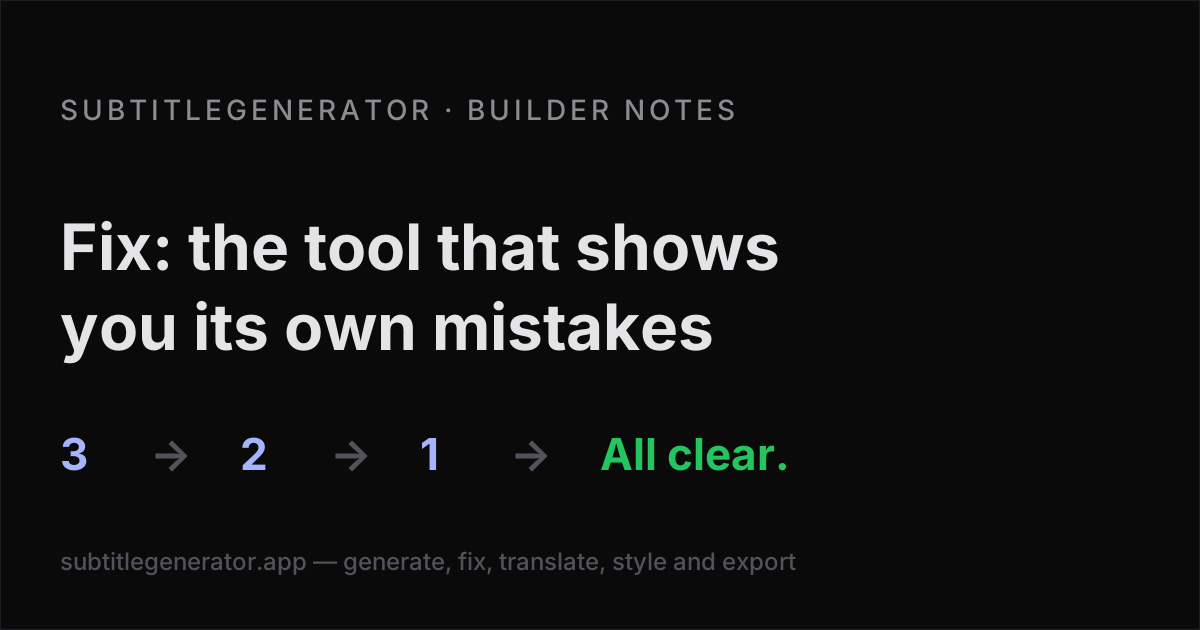
Why we built a subtitle tool that shows you its mistakes
Most AI subtitle tools bet their first draft is good enough. We built SubtitleGenerator around the opposite idea: flag uncertain words, count what's left, and finish with "All clear."
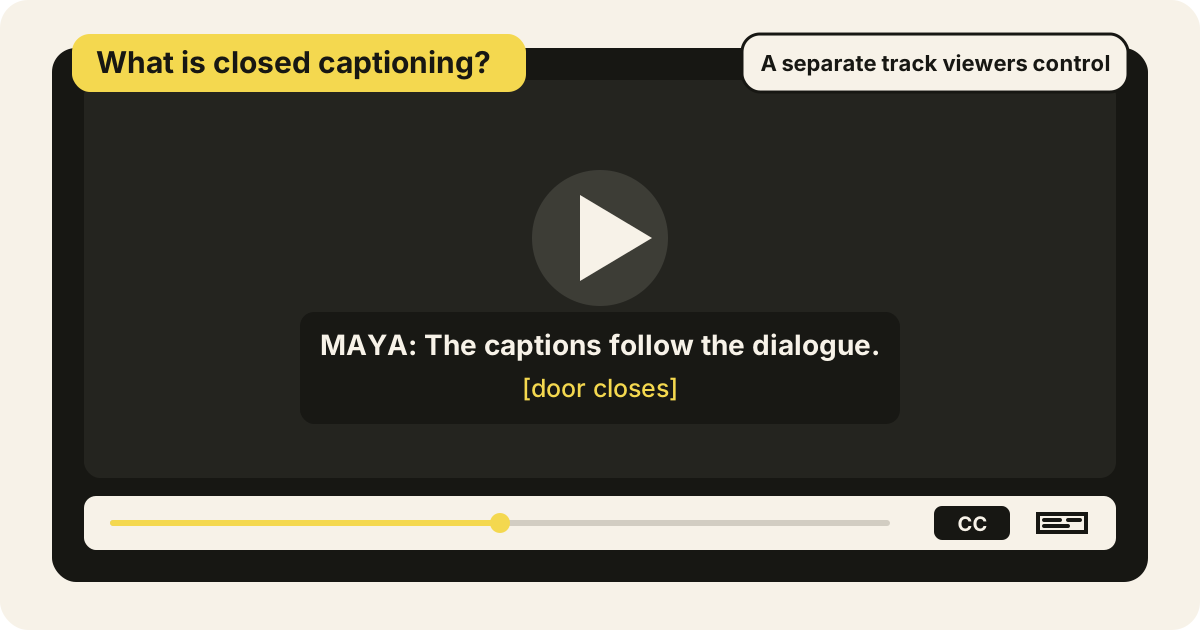
What is closed captioning?
Closed captioning turns speech and important sounds into synced text viewers can turn on or off. See examples, how it works and how it differs from subtitles and open captions.
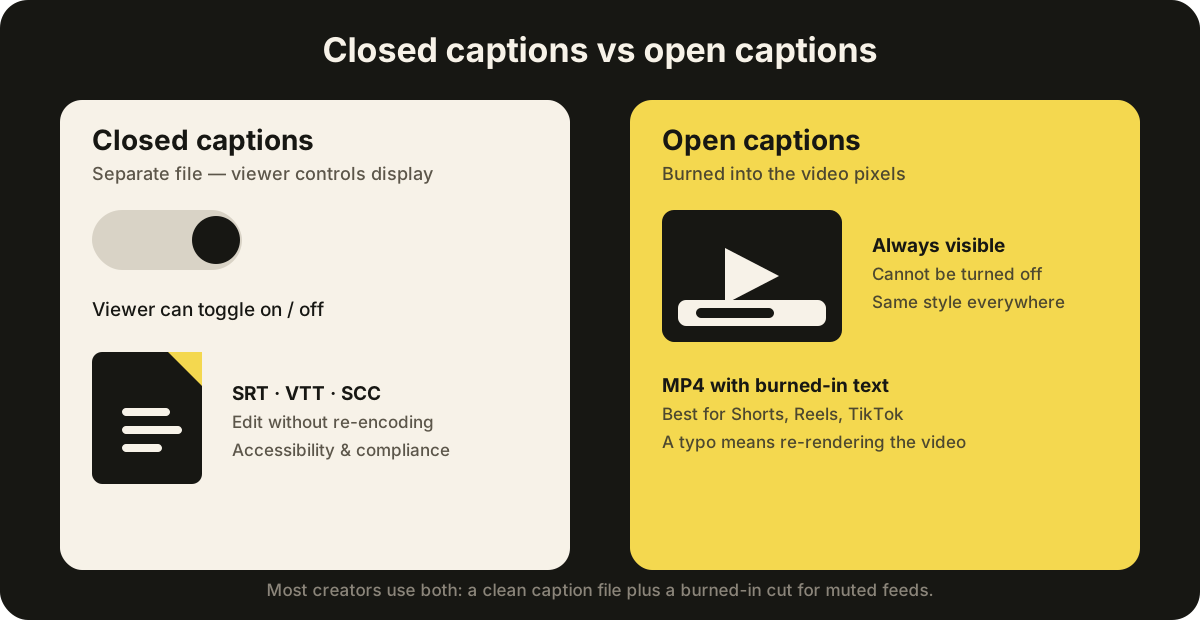
Closed captions vs open captions
Closed captions can be turned off; open captions can't. Learn when each wins and how to export both formats from one corrected draft.
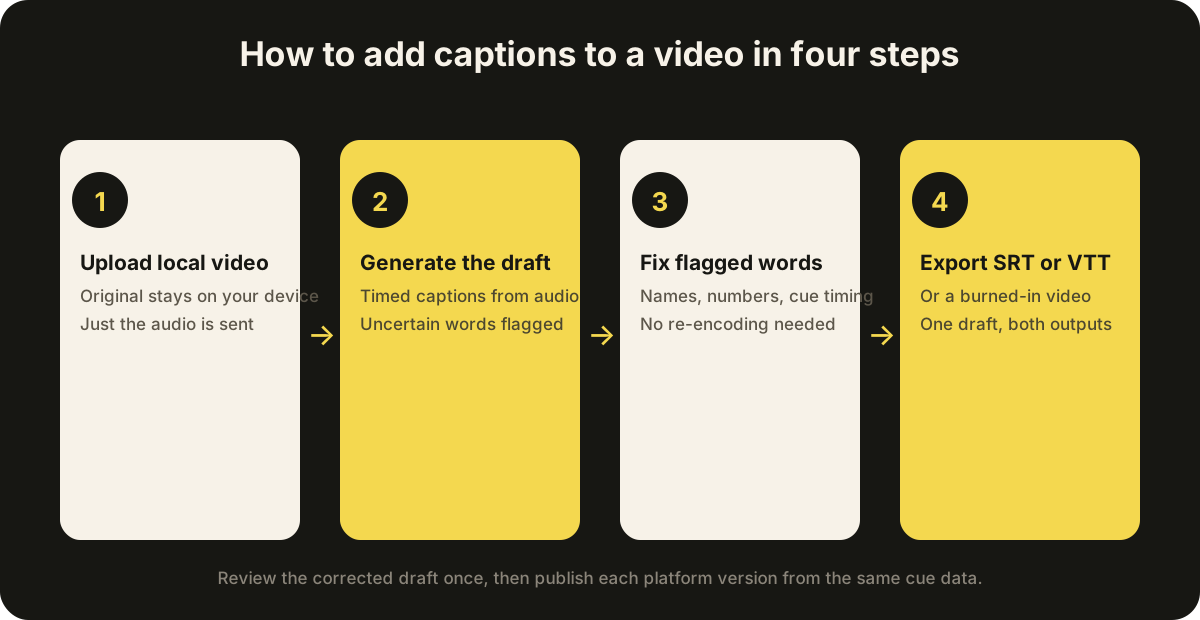
How to add captions to a video
Add captions to a video fast — upload locally, review flagged words, then export SRT, VTT or a burned-in video. Free to start, no signup.